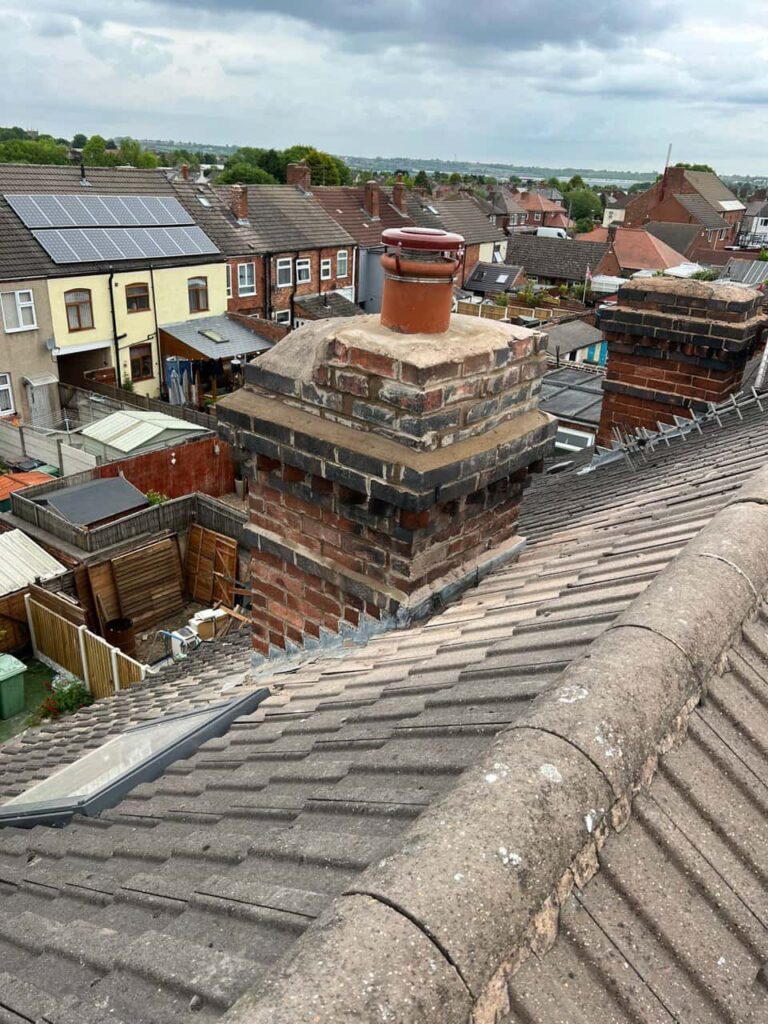
When a roof has been protecting a property for many years, it is natural to assume that any new problem means replacement is inevitable. However, the age of a roof does not tell the whole story. An older roofing system may still have many serviceable components, and a localised defect can often be repaired successfully without replacing the entire roof.
For homeowners in Pocklington, East Riding of Yorkshire, the important question is not simply how old the roof is, but what condition it is actually in. Professional assessment can distinguish between an ageing but repairable roof and one where deterioration has become too widespread for repeated local repairs to remain appropriate.
Roof Age and Roof Condition Are Not the Same Thing
Two roofs of a similar age can be in very different condition.
The way a roof has weathered depends on numerous factors, including its materials, construction, exposure and maintenance history. One older roof may remain generally sound apart from an occasional defect, while another may show deterioration across several components.
This is why decisions about roof repairs should be based primarily on condition rather than age alone.
Older Roofs Can Still Develop Isolated Problems
Not every defect on an ageing roof is evidence of complete failure.
A roof that remains fundamentally serviceable might experience:
- An individual cracked tile
- A small number of slipped tiles
- Localised flashing deterioration
- Minor ridge or verge defects
- A clearly identifiable leak
- Limited weather-related damage
Where the surrounding materials remain sound, repairing the affected area can restore dependable protection without unnecessarily disturbing the rest of the roof.
A Professional Inspection Looks Beyond the Visible Defect
One of the difficulties with assessing an older roof is that the visible problem may represent only part of its condition.
A broken tile, for example, can be replaced relatively easily. However, if surrounding tiles are also becoming brittle or the materials beneath have deteriorated, simply replacing the damaged tile may not address the wider issue.
A professional roof inspection can consider:
- Tiles or slates
- Flashing
- Ridge and verge areas
- Previous repair sections
- Roof junctions
- Signs of water ingress
- Accessible underlay and supporting components
- The overall consistency of the roof
This provides a much clearer basis for deciding whether repair remains suitable.
Previous Repairs Do Not Automatically Mean the Roof Is Finished
An older roof may contain several areas that have been repaired during its lifetime. That is not necessarily a negative sign.
Well-executed repairs can help extend the serviceable life of a roof considerably. A replacement tile or repaired flashing detail may continue performing reliably while the remainder of the roof also stays in good condition.
What matters is whether previous repairs remain sound and whether new problems are occasional or becoming increasingly frequent.
The Frequency of Repairs Tells You More
A roof requiring one isolated repair after a long period of dependable service is very different from one developing new problems every few months.
Increasing repair frequency can suggest that several components are reaching a similar stage of deterioration.
Signs that deserve a broader assessment include:
- Tiles repeatedly cracking or slipping
- Leaks developing in different areas
- Several roof details deteriorating simultaneously
- New defects appearing close to previous repairs
- Increasingly widespread weathering
At this stage, the roof should be considered as a complete system rather than a collection of individual faults.
What Condition Are the Remaining Tiles or Slates In?
The materials surrounding the damaged area are particularly important.
If the majority of tiles or slates remain secure and serviceable, there may be little reason to replace them simply because the roof is old.
However, if large numbers have become fragile, cracked or loose, replacing individual pieces may only provide temporary relief from a wider pattern of deterioration.
A professional roofer can assess whether the existing covering remains capable of providing dependable protection.
The Condition Beneath the Covering Also Matters
A roof is much more than the tiles or slates visible from outside.
Depending on its construction, components beneath the covering may include underlay, battens, fixings and structural timber. These elements all contribute to the performance of the roofing system.
If the visible covering remains reasonably sound but the underlying materials have deteriorated extensively, more substantial work may need to be considered.
Conversely, where the supporting system remains serviceable, an older roof may still respond very well to targeted repairs.
Recurring Leaks Need Careful Investigation
A single leak with an identifiable cause can often be repaired effectively.
Repeated water ingress is different, particularly when leaks appear in multiple locations.
Water can enter through one part of the roof and travel beneath the covering before becoming visible internally. This means the location of a ceiling stain does not necessarily identify the external defect.
On an older roof, recurring leaks should therefore be properly investigated rather than repeatedly treating only the most obvious symptoms.
Repair Can Help Preserve Serviceable Roofing Materials
One of the main purposes of professional roof repair is to retain sound materials wherever practical.
If most of the roof remains in suitable condition, removing it simply because of its age may be unnecessary. Correctly targeted repairs can address specific weaknesses while leaving serviceable sections undisturbed.
This approach relies on accurate diagnosis. The defect must be identified correctly, and the surrounding roof needs to be capable of continuing to perform.
When Might an Older Roof Need More Than Repair?
There eventually comes a point where widespread deterioration can make repeated local repairs less appropriate.
A broader roofing solution may need consideration when there is:
- Extensive deterioration across the covering
- Frequent water ingress
- Large numbers of failing tiles or slates
- Significant deterioration beneath the covering
- Numerous vulnerable roof junctions
- Repeated defects throughout different sections
- General loss of dependable weather protection
No single sign automatically determines the answer. The overall pattern of deterioration is what matters.
Avoid Judging an Old Roof From Ground Level Alone
An older roof can look worn without necessarily being beyond repair. Equally, a roof that appears relatively tidy from the ground may contain defects that are difficult to see.
Discolouration and general weathering should not automatically be confused with failure.
Professional inspection provides a more useful understanding because it focuses on the actual condition and function of the roofing components.
Small Repairs Can Prevent Wider Deterioration
Older roofs can be particularly vulnerable when minor defects are ignored.
A displaced tile or deteriorating flashing detail may initially be straightforward to address. If water is allowed to enter repeatedly, however, surrounding materials can gradually become affected.
Early repairs can therefore play an important role in preserving an ageing but otherwise serviceable roofing system.
The sooner a defect is correctly identified, the greater the opportunity to prevent it from affecting additional components.
Maintenance Becomes More Important as a Roof Ages
As roofing materials become older, keeping track of their condition becomes increasingly valuable.
This does not mean constantly carrying out work. Instead, homeowners should remain aware of changes that could indicate developing problems.
These may include:
- New water staining
- Slipped or missing tiles
- Visible cracking
- Changes around flashing
- Deterioration around ridge areas
- Recurring damp after rainfall
Addressing these warning signs promptly can help an older roof remain serviceable for longer.
Professional Roof Repairs in Pocklington
At TRP Roofing Pocklington, we provide professional roofing services throughout Pocklington, East Riding of Yorkshire. When assessing an older roof, the objective is to determine what it genuinely needs rather than assuming replacement is necessary simply because of its age.
Where deterioration remains localised, professional repairs may be able to restore the affected area while retaining the serviceable parts of the existing roof. If problems have become widespread, a broader roofing solution can be considered based on the roof’s actual condition.
A careful assessment provides the information needed to make that distinction.
Conclusion
An old roof is not automatically too old to repair. Many ageing roofs continue to perform effectively when individual defects are identified early and repaired professionally.
The key factors are the condition of the existing covering, the materials beneath it, the frequency of recent defects and whether deterioration is localised or widespread. Age provides useful context, but it should not be the sole reason for deciding that a roof needs replacing.
For homeowners in Pocklington, East Riding of Yorkshire, TRP Roofing Pocklington can assess ageing roofs and determine whether targeted repairs remain a suitable option. If your older roof has developed a leak, damaged tiles or another defect, professional inspection can establish what attention it actually needs while preserving sound roofing materials wherever appropriate.
Call us on: 01759 486 280
Click here to find out more about TRP Roofing Pocklington
Click here to complete our contact form and see how we can help with your roofing needs.